

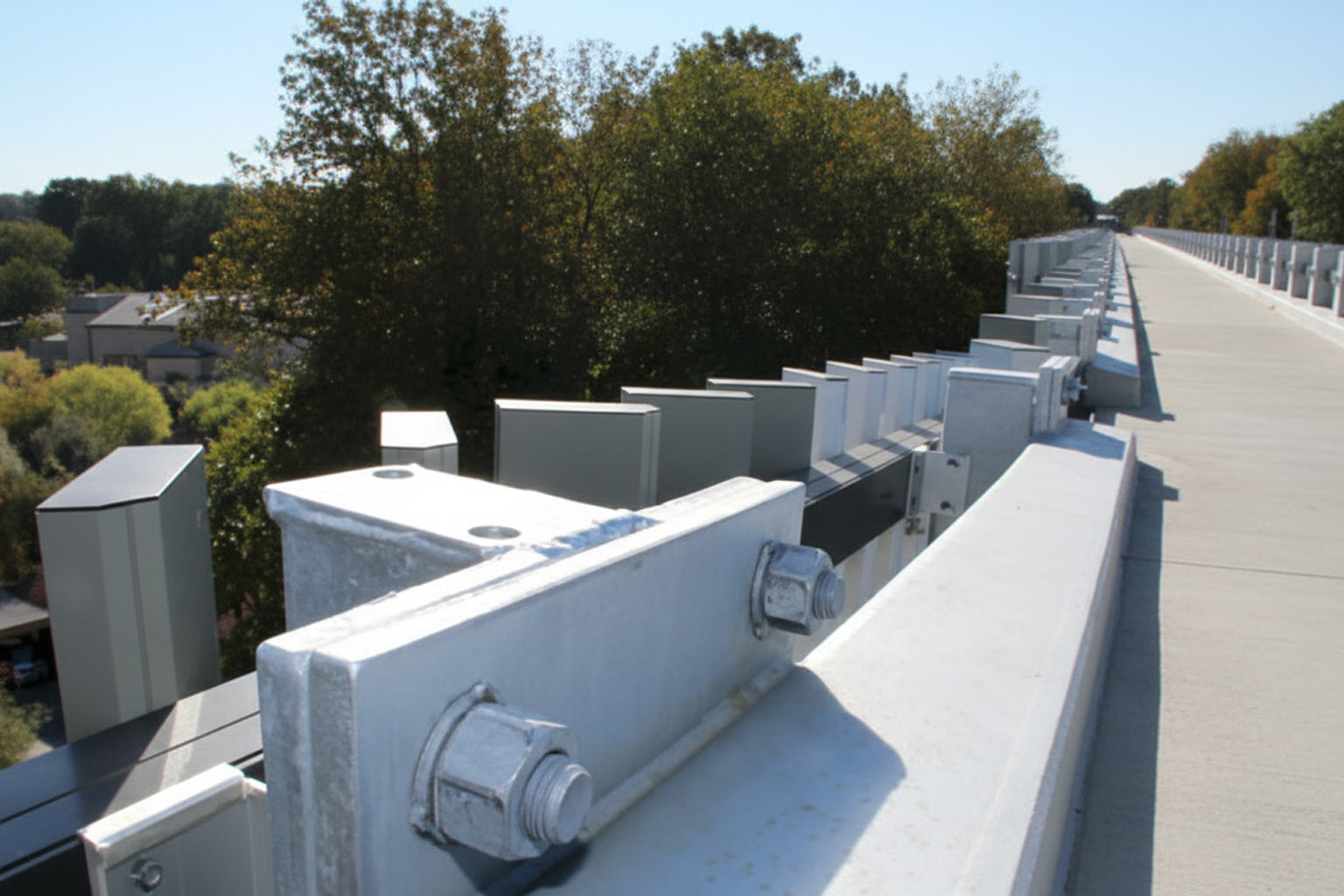
On June 11, 2020, the Research Council on Structural Connections (RCSC) published a landmark revision to the Specification for Structural Joints Using High-Strength Bolts, subsequently adopted by the American Institute of Steel Construction (AISC) into ANSI/AISC 360 for the design and construction of structural steel buildings. These specification updates eliminate unnecessary cost barriers and technical restrictions that previously complicated hot-dip galvanizing specification for slip-critical bolted connections, bringing building construction standards into alignment with changes already implemented for bridge applications.
The RCSC Specification: Scope and Authority
The RCSC specification establishes nationally recognized standards governing:
- Design methodology for bolted structural connections
- Installation procedures for high-strength fastener assemblies
- Inspection protocols and acceptance criteria
- Surface preparation requirements for faying surfaces
- Slip coefficient values for various surface conditions
As the authoritative reference incorporated into building codes, contract specifications, and structural design software, RCSC specification revisions directly impact project feasibility, construction costs, and material selection decisions across the structural steel industry.
Historical Context: AASHTO Precedent
The 2020 RCSC changes mirror modifications previously adopted by the American Association of State Highway and Transportation Officials (AASHTO) in the 8th Edition of the LRFD Bridge Design Specifications (2017). Those earlier revisions applied exclusively to federally-funded bridge and highway projects, creating a bifurcated regulatory environment where hot-dip galvanizing enjoyed specification advantages for bridges while facing outdated restrictions for buildings.
Pre-2020 specification landscape:
- Bridge projects (AASHTO): Simplified galvanizing requirements since 2017
- Building projects (RCSC/AISC): Retained obsolete surface preparation mandates and restrictive geometric tolerances
The 2020 RCSC update eliminates this discrepancy, extending research-validated practices to all structural steel applications beyond bridges—including commercial buildings, industrial facilities, transmission towers, and other bolted steel structures.
Key Revisions Impacting Hot-Dip Galvanizing
Two fundamental changes significantly improve the technical and economic viability of specifying hot-dip galvanized steel in slip-critical bolted connections.
Change 1: Elimination of Wire Brushing Requirement
Previous requirement (pre-2020):
Hot-dip galvanized faying surfaces in slip-critical connections required wire brushing to remove zinc coating and expose the underlying steel or zinc-iron alloy layers.
Current specification (2020 revision):
Wire brushing of hot-dip galvanized faying surfaces is explicitly prohibited. Galvanized surfaces shall be used in their as-galvanized condition.
Technical Rationale
Comprehensive industry research demonstrated that wire brushing galvanized faying surfaces provides no measurable improvement in slip resistance. Testing conducted by multiple research institutions established that:
As-galvanized surfaces achieve adequate slip coefficients without wire brushing:
- Class B slip coefficient (µ = 0.50) consistently attainable with as-galvanized surfaces
- Zinc coating surface texture provides sufficient friction for slip-critical connection design
- Variable wire brushing depth and intensity created inconsistent surface conditions
- Removed zinc coating offered no performance advantage over intact coating
The research conclusively invalidated the historical assumption that exposing base steel or alloy layers beneath the pure zinc surface layer would enhance connection slip resistance.
Economic and Practical Benefits
Eliminating the wire brushing requirement delivers immediate cost savings and operational improvements:
Reduced labor costs:
- Eliminates manual or power wire brushing operations at fabrication shops
- Removes secondary operation between galvanizing and assembly
- Reduces touch labor hours per connection
Faster project schedules:
- Removes time-consuming surface preparation step
- Simplifies workflow from galvanizing plant to erection site
- Eliminates inspection hold points for wire brushing verification
Improved quality and consistency:
- Eliminates variable surface preparation quality from operator technique
- Maintains uniform zinc coating protection across entire assembly
- Prevents localized coating damage that could initiate corrosion
Enhanced corrosion protection:
- Preserves intact zinc coating at critical connection interfaces
- Eliminates pathways for moisture and contaminant penetration at faying surfaces
- Maintains long-term durability at connection locations
Specification simplification:
- Removes ambiguous requirements for "extent" and "degree" of wire brushing
- Eliminates field disputes about adequate wire brushing compliance
- Reduces specification complexity and potential for misinterpretation
Implementation Guidance
For structural connections fabricated after the June 2020 revision:
Fabricators should:
- Use galvanized faying surfaces in as-received condition from galvanizer
- Verify specifications reference current RCSC standard (2020 or later)
- Remove any legacy wire brushing requirements from shop drawings and procedures
- Educate inspection personnel about prohibition of wire brushing
Specifiers should:
- Reference RCSC Specification for Structural Joints Using High-Strength Bolts (2020 or current edition)
- Remove wire brushing requirements from project specifications
- Verify contract documents reflect current RCSC provisions
- Update standard specifications and master format sections
Inspectors should:
- Accept as-galvanized faying surfaces without wire brushing
- Reject wire-brushed galvanized connections as non-compliant with current specifications
- Verify proper surface cleanliness (removal of oils, dirt, excess flux) per RCSC requirements
- Document compliance with current specification edition
Change 2: Increased Standard Bolt Hole Sizes
Previous specification:
Standard hole diameters and oversized/slotted hole dimensions for bolts ≥1-inch nominal diameter created fabrication challenges when accommodating galvanized coating thickness.
Current specification (2020 revision):
Standard bolt hole diameters and slot widths increased for bolts 1-inch nominal diameter and larger, providing additional clearance that accommodates hot-dip galvanized coating thickness without requiring oversized or slotted holes.
Technical Background
Hot-dip galvanized coating thickness (typically 3.9-8.0 mils per ASTM A123 for structural steel) adds to the nominal steel dimensions. In bolted connections, this thickness increase affects:
- Hole clearance around bolt shanks
- Thread engagement length
- Washer seating and load distribution
For smaller bolts (< 1 inch diameter), standard hole clearances historically provided adequate tolerance. However, larger diameter bolts in slip-critical connections—particularly common in heavy construction—frequently required oversized or slotted holes when using galvanized steel, complicating design and increasing costs.
Revised Hole Dimensions
The 2020 RCSC specification modified standard hole provisions specifically for bolts with nominal diameters ≥1 inch:
Impact on connection design:
- Standard holes now accommodate galvanized coating thickness on connected parts
- Reduces necessity for oversized holes (additional cost and design complexity)
- Minimizes need for slotted holes (even more restrictive design requirements)
- Simplifies detailing and fabrication for galvanized heavy connections
Design implications:
- Slip-critical connections with large-diameter bolts more economically feasible with HDG
- Reduced bearing stress concentrations from smaller holes (compared to oversized)
- Simplified connection analysis (standard holes vs. oversized/slotted provisions)
- Improved structural efficiency through tighter connection tolerances
Economic Benefits
Standardized hole dimensions for galvanized connections eliminate cost premiums associated with special hole configurations:
Fabrication cost reduction:
- Standard hole drilling/punching equipment and procedures applicable
- No special tooling or setup for oversized hole production
- Reduced quality control complexity
- Faster fabrication throughput
Design efficiency:
- Simplified connection calculations (standard hole design provisions less restrictive)
- Potential for more compact connection designs
- Reduced connection weight and material costs
Field erection advantages:
- Standard bolts compatible with standard holes improve fit-up
- Reduced shimming and adjustment during assembly
- Faster bolt installation
Application Scope
The enlarged standard hole dimensions specifically benefit:
Heavy structural construction:
- High-rise buildings with large column connections
- Industrial facilities with heavy machinery support
- Crane support structures and material handling systems
- Power transmission structures
Slip-critical connection types:
- Bearing-type connections subject to vibration or load reversal
- Connections designed to prevent slip at service loads
- Seismic-resistant connections requiring friction energy dissipation
Additional Specification Updates Affecting Galvanizing
Beyond the primary changes eliminating wire brushing and expanding hole sizes, the 2020 revision addresses several other topics relevant to galvanized structural connections.
Class D Slip Coefficient (Zinc-Rich Paint Over HDG)
Status: Not included in 2020 revision; under ongoing research
The specification currently recognizes Class A (uncoated blast-cleaned steel), Class B (as-galvanized surfaces), and Class C (blast-cleaned with specified coatings) slip coefficients. Class D would establish provisions for zinc-rich paint applied over hot-dip galvanized faying surfaces, creating a duplex system combining barrier and sacrificial corrosion protection with enhanced slip resistance.
Research status: The RCSC deferred inclusion pending completion of research funded jointly by industry stakeholders and conducted by Rutgers University. This comprehensive investigation examines slip behavior of:
- Hot-dip galvanized surfaces (baseline)
- Thermal spray zinc (metallized) surfaces
- Zinc-rich paint over galvanizing (duplex systems)
- Mixed coating assemblies (galvanized connected to metallized)
Anticipated benefits upon approval:
- Higher allowable slip coefficient (µ > 0.50) for duplex systems
- Reduced bolt quantities or smaller connection sizes
- Additional corrosion protection in severe environments
- Specification framework for duplex system applications
Current practice: Until Class D provisions are formally adopted, zinc-rich paint over galvanizing in slip-critical connections requires project-specific testing per RCSC Appendix A or approval by the Engineer of Record based on manufacturer data and published research.
ASTM F3125 Grade A490 Bolt Galvanizing Prohibition
Current status: Galvanizing of Grade A490 bolts remains prohibited; research completed and ASTM ballot underway
The RCSC specification continues to prohibit hot-dip galvanizing of Grade A490 high-strength bolts (minimum 150 ksi tensile strength) due to historical concerns about hydrogen embrittlement and delayed fracture.
Updated commentary (2020 revision): "Applying zinc to Grade A490 bolts by galvanizing, metallizing, or mechanical coating is not permitted because its effects on embrittlement and delayed cracking have not been fully investigated to date. Research is in progress into whether this prohibition can be repealed."
Research completion: Industry-funded research addressing A490 bolt galvanizing embrittlement concerns has been completed. The investigation examined:
- Hydrogen embrittlement susceptibility in galvanized A490 fasteners
- Delayed fracture behavior under sustained loading
- Effect of post-galvanizing heat treatment (baking) on embrittlement mitigation
- Long-term performance in representative service conditions
ASTM ballot status: Based on favorable research findings, an ASTM F16.02 Subcommittee ballot is proceeding to modify ASTM F3125 to permit hot-dip galvanizing of Grade A490 bolts with appropriate embrittlement controls (likely post-galvanizing hydrogen bake).
Anticipated timeline: If ASTM ballot approval occurs, subsequent RCSC specification revision would remove the A490 galvanizing prohibition, enabling uniform galvanized bolt assemblies across all strength grades.
Current alternative: Grade A325 bolts (minimum 120 ksi tensile strength) remain approved for hot-dip galvanizing and satisfy design requirements for most applications. Specifiers requiring galvanized high-strength bolts currently use A325 rather than A490 grade.
Slip and Tension Creep Testing Validity Period
Revision: Appendix A slip coefficient and tension creep test results now valid for 7 years (previously indefinite validity)
RCSC Appendix A establishes procedures for qualifying faying surface treatments through laboratory slip testing. The 2020 revision institutes a 7-year expiration for test data, requiring periodic revalidation.
Rationale:
- Manufacturing processes evolve over time (coating formulations, application methods)
- Raw material sources and quality may change
- Periodic verification ensures continued compliance with tested performance
Impact on existing qualifications: Testing conducted by the American Galvanizers Association in 2017 qualified two zinc-rich paint systems for application over hot-dip galvanizing to achieve higher slip coefficients. This data approaches the 7-year validity limit, necessitating evaluation for potential retesting.
Industry response: Coating manufacturers and industry organizations continue monitoring validity timelines and conducting retesting as required to maintain product qualifications and design provisions.
Practical Implementation: Specifier Checklist
Engineers and architects specifying structural steel with slip-critical bolted connections should:
Review and update specifications:
- [ ] Reference RCSC Specification for Structural Joints Using High-Strength Bolts (2020 or current edition)
- [ ] Remove wire brushing requirements for galvanized faying surfaces
- [ ] Verify standard hole dimensions reference current RCSC tables
- [ ] Eliminate obsolete surface preparation references
Coordinate with structural steel fabricators:
- [ ] Confirm fabricators understand prohibition of wire brushing galvanized surfaces
- [ ] Verify shop drawing standards reflect current hole dimension requirements
- [ ] Establish inspection criteria consistent with current specifications
Communicate with project team:
- [ ] Educate contractors about specification changes affecting field procedures
- [ ] Brief inspection personnel on updated acceptance criteria
- [ ] Update standard details and connection design aids
Optimize connection design:
- [ ] Evaluate cost savings from eliminating wire brushing operations
- [ ] Consider standard holes (vs. oversized) for large-diameter bolt connections with HDG
- [ ] Assess lifecycle benefits of galvanized connections vs. painted alternatives
The 2020 RCSC specification revision eliminates technical barriers and cost premiums that historically complicated hot-dip galvanizing specification for slip-critical structural connections. By prohibiting unnecessary wire brushing of galvanized faying surfaces and expanding standard bolt hole dimensions for large-diameter fasteners, the updated standard removes approximately 10-15% of connection fabrication costs associated with galvanizing while maintaining equivalent or superior structural performance. These research-validated changes align building construction specifications with bridge design provisions adopted by AASHTO in 2017, creating uniform treatment of galvanized connections across all structural applications. For structural engineers evaluating corrosion protection systems, the specification updates remove artificial disadvantages that previously discouraged galvanizing selection, enabling lifecycle cost analysis based purely on performance and durability rather than obsolete fabrication requirements. As ongoing research addresses remaining topics—including Class D slip coefficients for duplex systems and Grade A490 bolt galvanizing approval—the technical and economic case for hot-dip galvanized structural connections continues strengthening. See the original AGA resource on the 2020 RCRC Specification Revision.
